
How To Pick Your First Racket in 2026
A practical, NON-AI-SLOP, no-BS guide to choosing your first padel racket in 2026. Shapes, materials, weight, balance and budget explained for beginners.
How To Pick Your First Racket in 2026
Hi there,
 Aaron from PadelFather here 💪🏼
First of all, I AM MANUALLY TYPING THIS TUTORIAL on my keyboard like it's 2015… THIS IS NOT YET ANOTHER CHATGPT AI SLOP.
Disclaimer: I am using AI to translate this, as I don’t know Spanish… yet 😎
Now that we got that cleared up, keep on reading if:
- you love padel
- you’re looking to buy your first padel racket, but don’t know how to choose
When to Buy a Padel Racket
Let’s start with the most important question:
Do you REALLY need to buy a racket?
If you’ve only played once or twice, it might be premature. Why?
- You don’t know yet if you’ve caught the padel bug
- You might be throwing money at something you won’t use long-term
During the first months, renting a padel racket is the safest bet.
Why renting works so well at the beginning:
- you can try different models
- different shapes
- different weights and balances
…and start developing a feeling for what you like and what you don’t.
But if you’ve been playing regularly for a couple of months, and you’re confident you’ll continue… it might be time to start looking for your new best friend.
⚠️ BE CAUTIOUS Once you start diving into the padel racket rabbit hole, there’s no turning back.
Viewer caution advised.
Determining Your Padel Level
After a couple of months of regular play, it’s a good idea to identify your actual level.
For example, ex-tennis players tend to progress much faster in the beginning because they already have:
- good hand-eye coordination
- physical conditioning
- racket control
They might not know padel tactics, positioning, or padel-specific shots yet, but they usually have an advantage over someone picking up padel as their first racket sport.
You’re likely in one of these stages:
-
Initiation phase Never took classes, little technique, unclear court positioning
-
Beginner phase Took some classes, play occasionally, slow rallies
-
Beginner–Intermediate Playing regularly, basic positioning, most strokes under control
-
Intermediate Several lessons, good control of strokes, faster rallies
Which level do you see yourself at?
Once you’ve answered that, choosing the right racket becomes much easier.
Choosing the Best Racket Shape for Beginners
We’ll publish a more extensive guide on racket shapes soon, but for now let’s keep things simple.
The first concept you need to understand is the sweet spot.
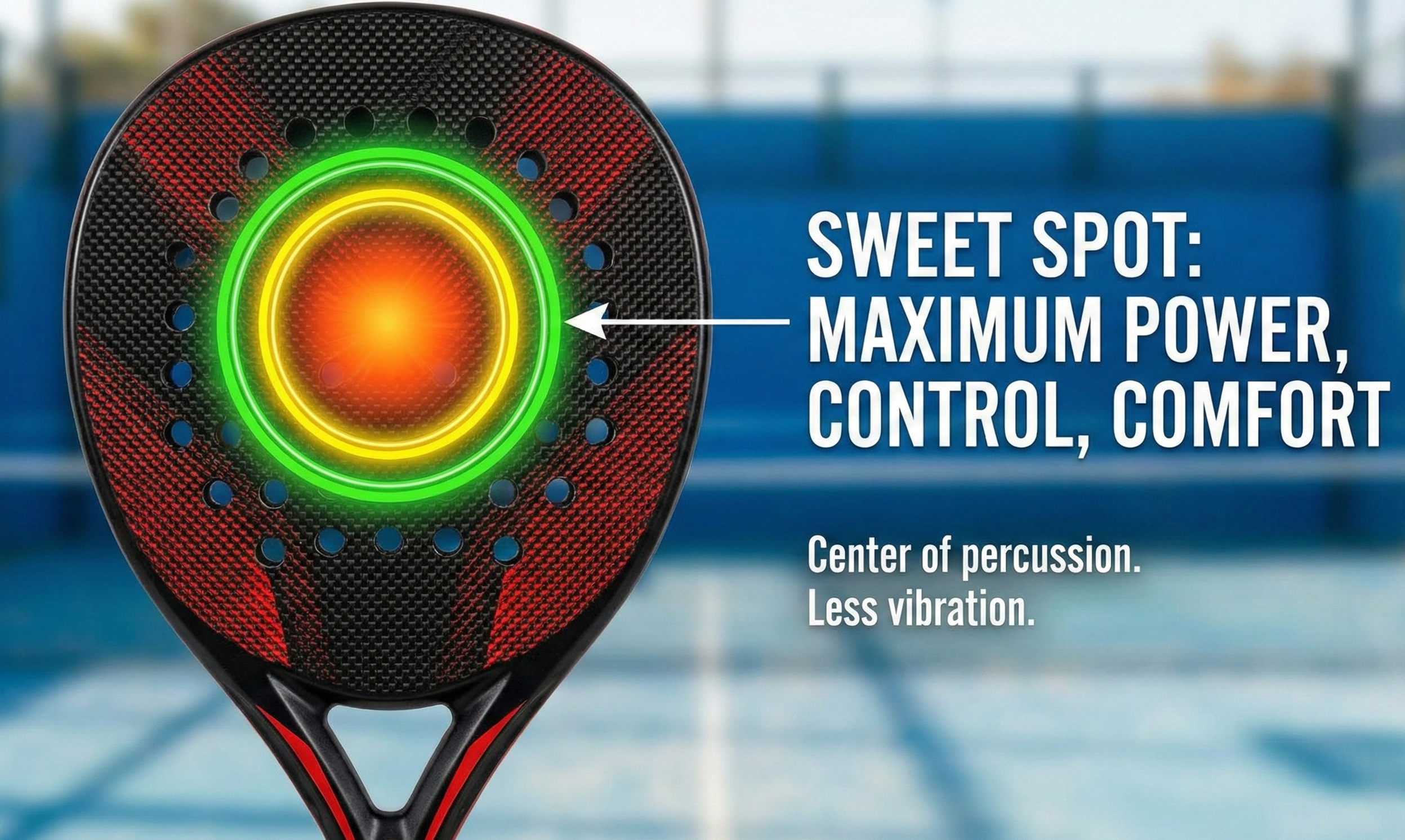
The sweet spot is the area of the racket face that gives you the best balance between power and control.
You’ll recognize it instantly:
- the sound is clean
- the impact feels smooth
- everything feels juuuust right
The 3 Main Padel Racket Shapes
Round Shape
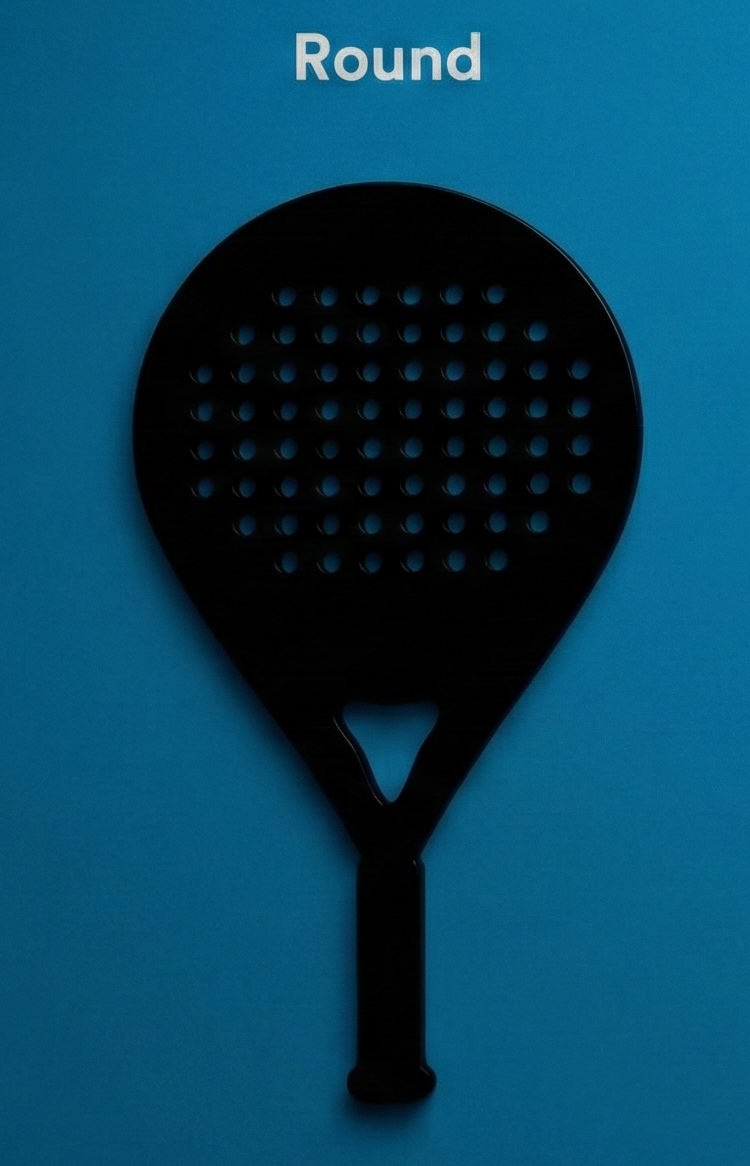
- Large sweet spot
- Maximum control
- Sweet spot in the center
Teardrop Shape
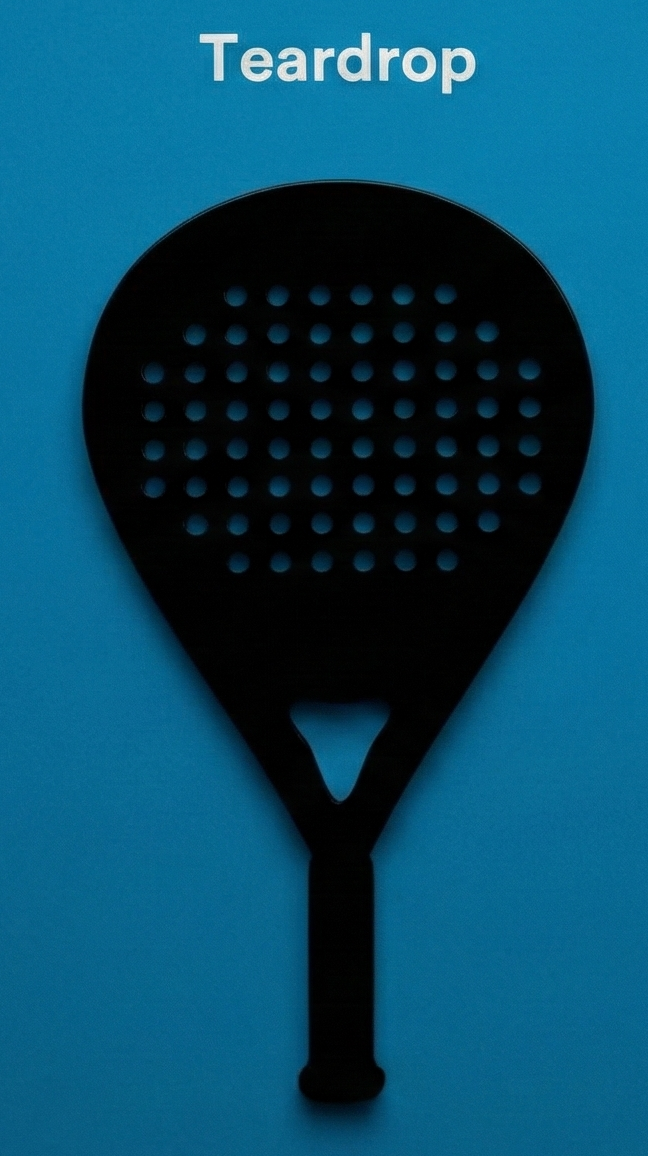
- Balance between control and power
- Medium sweet spot
- Great once the player improves
Diamond Shape
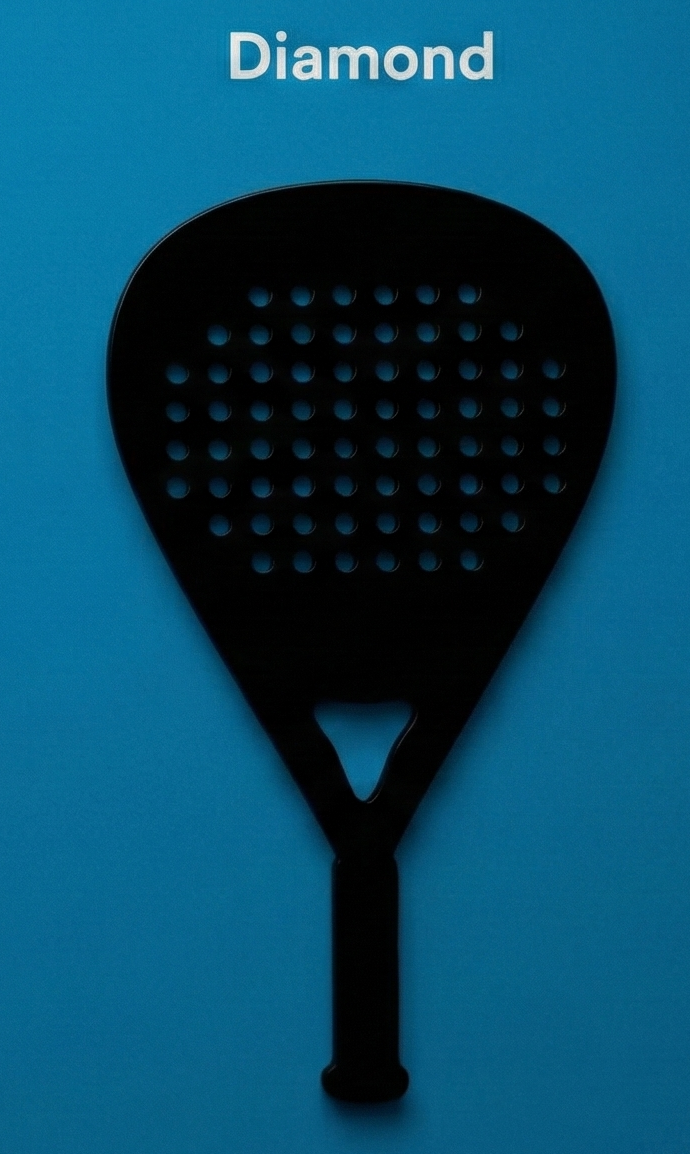
- More power
- Smaller sweet spot
- Sweet spot closer to the tip of the racket
As you can imagine, a diamond shape is usually a poor choice for your first padel racket. It forces you to focus much more on clean contact and is far less forgiving.
👉 Quick recommendation
- Initiation phase → round shape
- Lower intermediate → round or teardrop
Materials, Weight & Power (Read This Carefully)
I need you to look at your inner self and repeat 28 times:
I DO NOT NEED MORE POWER
A very common beginner mistake is trying to imitate the pros and smash everything to release some unhealthy inner anger.
You might need therapy. You do not need a harder or heavier racket.
Racket Materials: Carbon Fiber vs Fiberglass
The material used on the racket surface affects how the ball rebounds after impact.
Carbon Fiber

Carbon fiber is stiffer, which means it:
- deforms less on impact
- transfers energy more efficiently
- feels precise and explosive
This is why it’s usually favored by advanced players with good technique.
Fiberglass

Fiberglass is more flexible and elastic, so it:
- bends more on impact
- absorbs vibration
- feels softer and more forgiving
This makes fiberglass rackets easier to control for beginners and casual players.
Weight & Balance Explained Simply
I’m not going to write much about weight because, IMHO, it’s a bit overrated. I don’t believe 5 grams make the dramatic difference some people claim.
That said, beginner / low-intermediate rackets are usually best found in the 340g–360g range (without overgrips).
What matters far more is balance — where that weight is located.
Head-Heavy Rackets (High Balance)
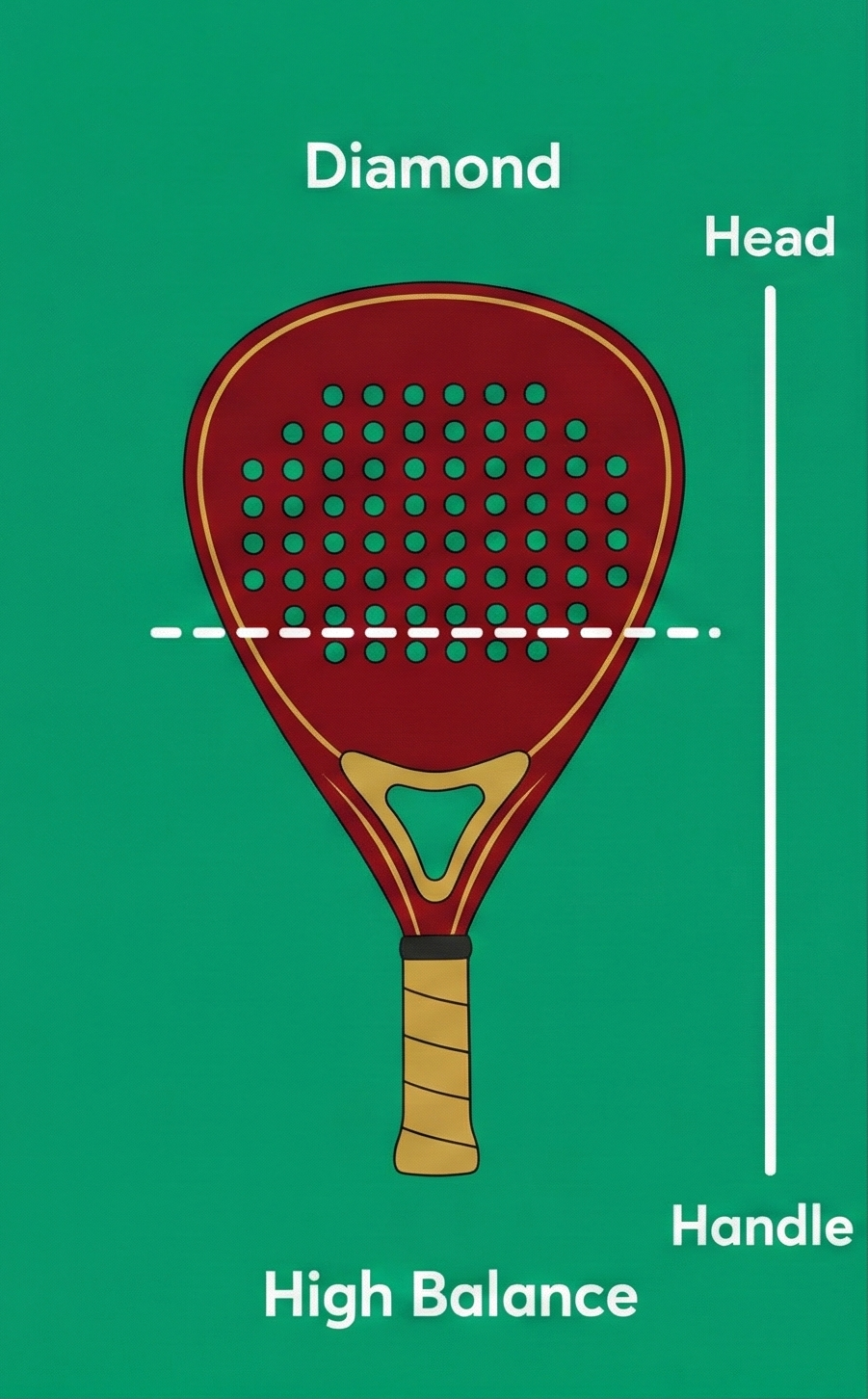
- More mass toward the head
- Higher power potential
- Slower swing and reduced maneuverability
This can be difficult to manage when starting out.
Even / Balanced Rackets (Medium Balance)
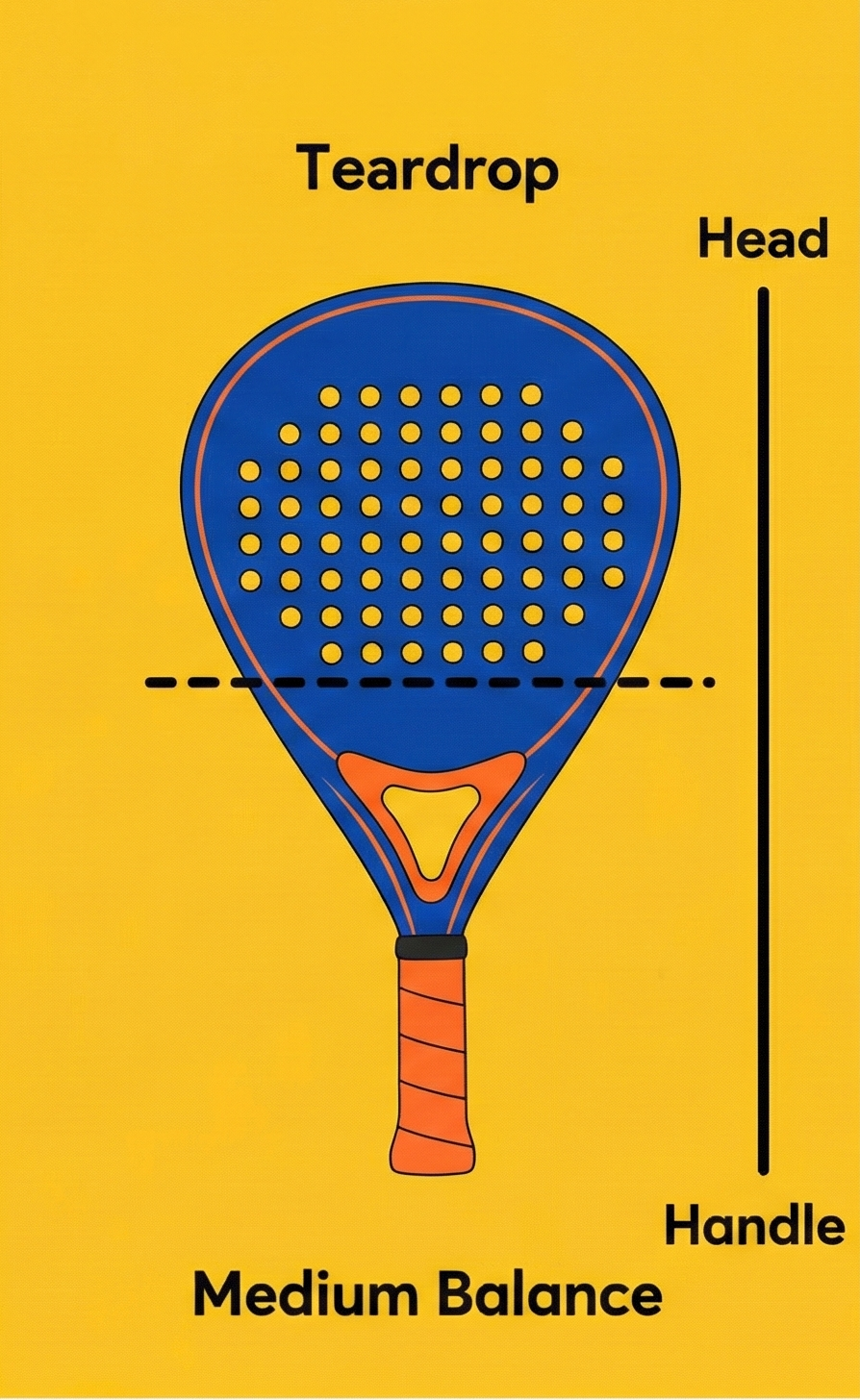
- Weight distributed closer to the center
- Good compromise between power and control
Ideal if you don't yet have a defined playing style.
Head-Light Rackets (Low Balance)
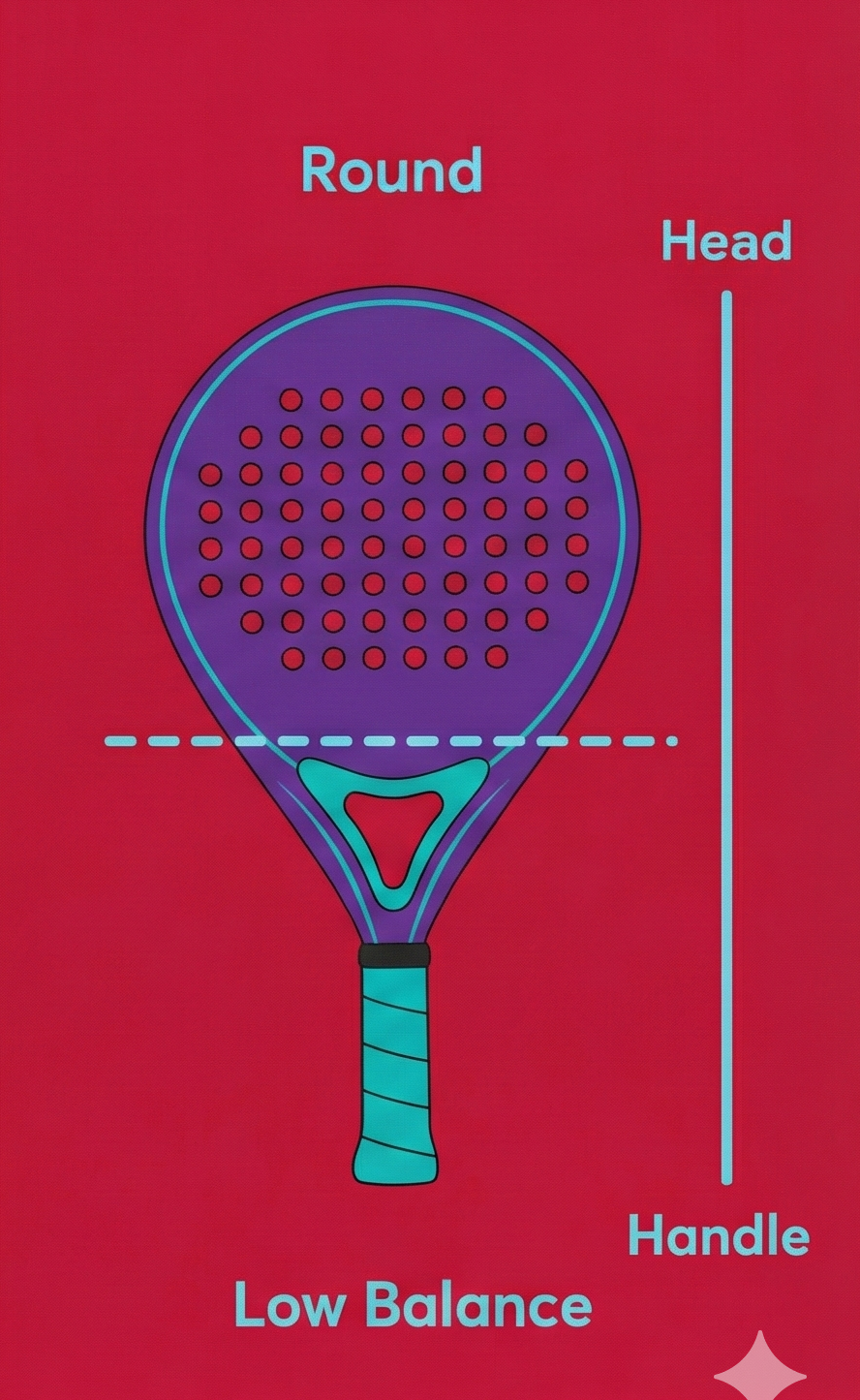
- More weight near the grip
- Faster swing
- Easier defense and quick volleys
Often the most comfortable option for newer players.
Budget: Don’t Overthink It
At last, let’s talk MONEYYYY 💸
Padel rackets have become increasingly expensive as the sport has grown.
My two cents:
- don’t overspend on your first racket
- you will hit the glass
- you will scratch it
- your needs will evolve as your skills improve
Buying a used padel racket is completely fine at the beginning.
Final Tip
Now that you know what to look for, try the free PadelFather racket quiz here:
👉 QUIZ
And if you still have questions, DM us on Instagram @padelfather. We respond PERSONALLY to all messages 💪🏼
Cheers,
A.